Why Great Golf Clubs Don’t Happen by Accident
Behind the scenes, there are systems, standards, and expectations that guide every part of the operation. None of them are particularly glamorous. All of them are essential.


The best golf clubs may look effortless from the outside—but behind every calm, well-run operation is structure, discipline, and leadership. Success in golf is rarely accidental.
By James Fairmont
There is a tendency in golf to attribute successful clubs to luck.
A good piece of land. A strong membership base. A well-known name. A busy tee sheet.
From the outside, it can appear that some clubs simply “work” while others struggle to keep pace. But spend enough time inside well-run operations and a different truth emerges:
Great clubs are not accidental.
They are built—deliberately, consistently, and often quietly.
Success Is Usually Invisible
The best-run golf clubs rarely feel dramatic.
There are no daily crises. No visible scrambling. No constant firefighting. Instead, there is a sense of calm control. Things happen when they should. Staff know their roles. Members feel looked after. Visitors leave with a positive impression.
What looks effortless is almost always the result of structure.
Behind the scenes, there are systems, standards, and expectations that guide every part of the operation. None of them are particularly glamorous. All of them are essential.
The Difference Is in the Details
The gap between average and excellent clubs is rarely defined by one major factor. More often, it is a collection of small, consistent decisions.
- Communication that is clear and timely
- Staff who are trained and supported
- Facilities that are maintained properly
- Events that are organised professionally
- Members who understand how things work
None of these are revolutionary ideas. But the discipline to execute them well, every day, is what separates strong clubs from struggling ones.
Leadership Sets the Tone
At the centre of every successful club is leadership that understands its role.
Good leadership in golf is not about visibility. It is about direction.
It involves:
- setting clear standards
- making decisions early
- taking responsibility when things go wrong
- ensuring consistency across departments
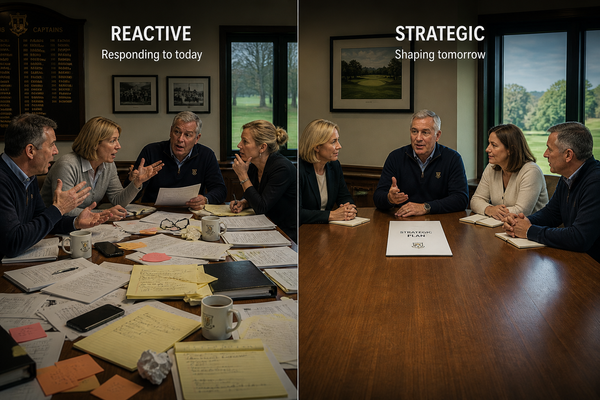
- thinking ahead rather than reacting
When leadership is strong, the rest of the club follows. When it is unclear or inconsistent, problems spread quickly.
Culture Is Built, Not Declared
Many clubs talk about culture. Few actively shape it.
Culture is not what appears in a strategy document. It is what happens in everyday moments:
- how staff speak to members
- how complaints are handled
- how rules are applied
- how new members are welcomed
- how standards are maintained
Left unmanaged, culture drifts. Managed well, it becomes a competitive advantage.
The Role of Discipline
One of the most underrated traits in successful clubs is discipline.
The discipline to:
- follow processes
- maintain standards
- enforce rules fairly
- plan ahead
- avoid shortcuts
Discipline is not restrictive. It creates freedom—because it reduces chaos.
No Shortcuts to Consistency
Many clubs look for quick wins. New initiatives. Big ideas. Sudden changes.
But sustainable success in golf clubs is rarely about dramatic moves. It is about consistency over time.
Doing the basics well. Repeatedly.
That is harder than it sounds.
Final Thought
Every golf club has potential.
Some fulfil it. Others do not.
The difference is rarely luck.
It is the result of decisions made daily—often small, often unseen—that shape how a club operates, how it feels, and how it is experienced by those who use it.
Because in the end, great golf clubs are not found.
They are built.