Women Don’t Want Ladies Sections. They Want Great Golf Clubs.
The concept of a “ladies’ section” is rooted in a different era of golf. At a time when access was limited and participation was uneven, it provided structure, opportunity, and a sense of belonging.

By Alexandra Green.
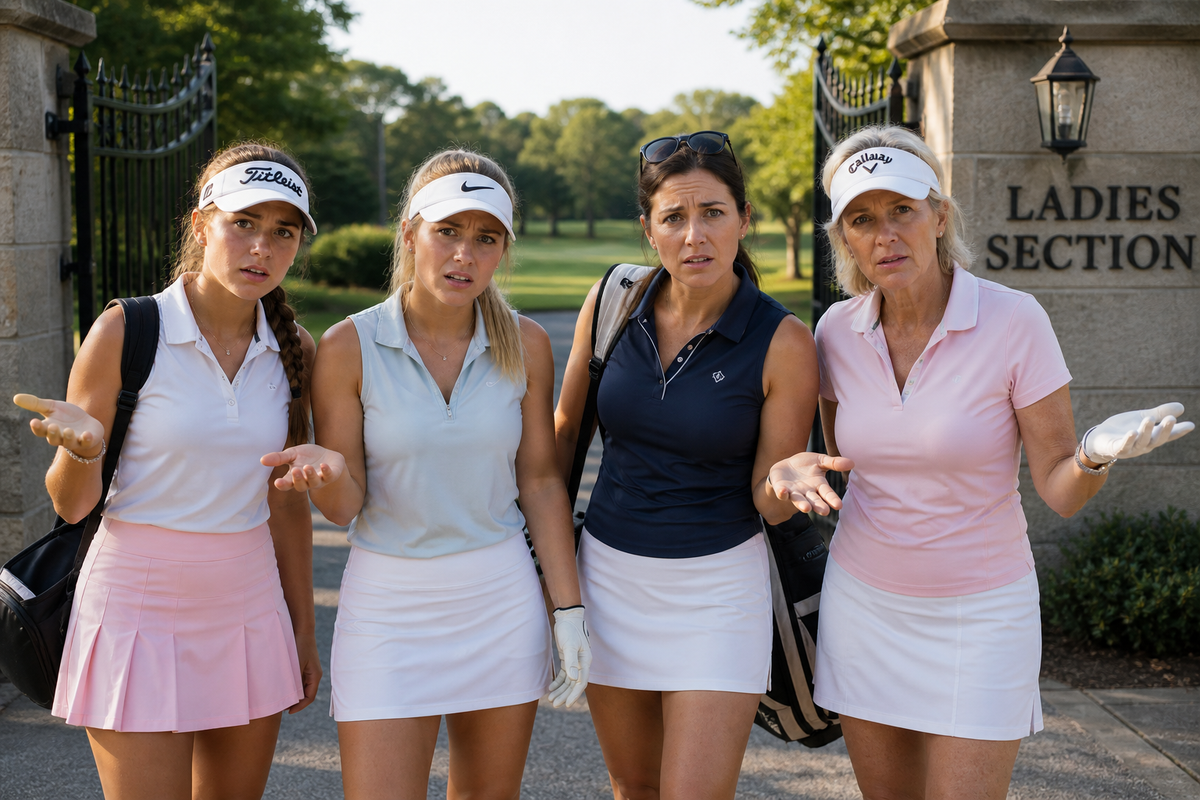
Golf clubs have spent years trying to “include” women. In many cases, they’ve built structures around them instead. The difference matters—and it may be holding clubs back more than they realise.
There is a well-established pattern in golf clubs when it comes to addressing the presence of women. It is rarely deliberate, and almost always well-intentioned. Faced with the need to grow female participation, clubs respond by creating something specific: a ladies’ section, a separate competition structure, designated times, committees, events, initiatives, programmes. From the outside, it looks like effort. From the inside, it often feels like separation. The assumption underpinning this approach is that women require something different in order to engage with the club—something tailored, something distinct, something that acknowledges their presence by building around it. What is less frequently asked is whether this approach actually aligns with what many women want. Because increasingly, it does not. What many women are looking for is not a parallel structure but a normal one; not a version of the club designed for them, but a club that simply works for everyone.
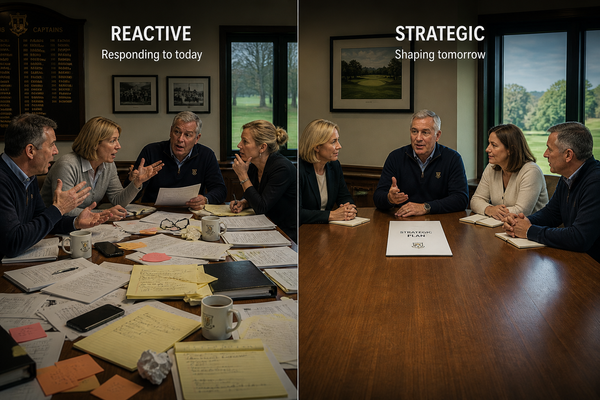
The concept of a “ladies’ section” is rooted in a different era of golf. At a time when access was limited and participation was uneven, it provided structure, opportunity, and a sense of belonging. It created a pathway into the game and allowed for organisation where none previously existed. In that context, it made sense. The problem is not its origin; it is its persistence. While the structure remains familiar, expectations around it have shifted. The modern golfer, regardless of gender, is less interested in being categorised and more interested in being included, less interested in defined boundaries and more interested in flexibility. Yet many clubs continue to operate as though the opposite were true.
The result is not exclusion in the traditional sense but something more subtle. Women are present in the club, but not always fully integrated within it. They have access, but not always influence. They are represented, but often within a framework that sits alongside rather than within the core of the club’s activity. This creates a cultural gap—not one that is immediately obvious, but one that becomes increasingly apparent over time. It can be seen in competition structures that feel separate rather than shared, in tee time allocations that create implicit hierarchies, and in social spaces that reflect established patterns of use rather than evolving ones. None of these are, in isolation, significant. Together, they shape experience.
It is worth pausing on a simple question. If a new member, female, in her twenties or thirties, joins a golf club today, what is she actually looking for? Not in theory, but in practice. She is likely looking for flexibility in when she can play. She is likely to value the ability to integrate into existing groups rather than being directed towards a predefined one. She is likely to expect the same access to competitions, tee times, and facilities as any other member. What she is less likely to be seeking is a structure that defines her participation before she has had a chance to shape it herself.
This is where many clubs encounter difficulty. They continue to operate systems that were designed to create opportunity but which now, in some cases, limit it—not overtly, but structurally, not intentionally, but effectively. The challenge is not that these systems exist; it is that they are rarely questioned. They are accepted as part of the fabric of the club rather than examined as part of its future.
There is also a broader cultural dynamic at play. Golf clubs are, by their nature, environments shaped by tradition. That tradition is often one of their greatest strengths, providing identity, continuity, and a sense of belonging that is difficult to replicate elsewhere. But tradition can also create inertia. Practices that were once progressive become fixed. Structures that were once necessary become assumed. Change, when it is considered, is approached cautiously, often incrementally. This is understandable. It is also limiting. Culture does not remain static, even when structures do. Expectations evolve, behaviour changes, and the wider world influences how people experience the club, whether the club chooses to recognise it or not. When structures fail to evolve alongside those expectations, a gap emerges.
The most effective clubs are not those that abandon their traditions but those that understand which parts of those traditions remain relevant and which need to adapt. In the context of women’s participation, this often means shifting from a model of separation to one of integration. This is not about removing opportunities but redefining them. It is about ensuring that participation is not determined by category but by choice, that access is not shaped by historical structure but by current demand, and that the club operates as a single environment rather than a collection of parallel ones.
This shift is not without challenge. Existing members may value the structures they are familiar with, and there may be a strong sense of identity attached to them. There may be concerns that change will dilute something that has been built over time. These concerns are valid, but they must be balanced against a different reality. Clubs are not static communities; they are evolving ones. What works for one generation does not automatically work for the next, and what feels inclusive to those who have always been part of the system may feel restrictive to those entering it for the first time.
This is where leadership becomes critical. Change in this context is not about imposing a new model but about creating an environment where participation feels natural rather than directed, where members can engage with the club in ways that reflect their preferences rather than predefined pathways. It is about removing friction, and in many cases, that friction is structural rather than personal.
There is also a commercial dimension that should not be overlooked. Clubs that successfully integrate women into the full life of the club tend to see broader benefits. Increased participation leads to increased engagement, increased engagement leads to stronger retention, and a more balanced membership base creates a more dynamic environment both socially and financially. This is not about targeting a specific group but about strengthening the club as a whole.
Perhaps the most important shift, however, is perceptual. A club that feels integrated feels modern, not in a superficial sense but in a structural one. It signals that the club understands how people want to engage with it, that it is confident enough to evolve, and that it values participation over categorisation. These signals matter because they influence decisions—whether to join, whether to stay, whether to recommend.
This is not an argument for removing every existing structure. Some will continue to serve a purpose, and some will remain valuable for those who choose to engage with them. The key is that they should be optional, not defining; they should support participation, not shape it.
At its core, this is a question of mindset. Are women in the club seen as a group to be accommodated, or as members to be fully integrated? The difference is subtle, but the impact is not.
Golf clubs do not need to create better structures for women. They need to create better clubs. Because when the club works properly for everyone, the question of structure becomes far less important, and participation becomes what it should always have been: natural.